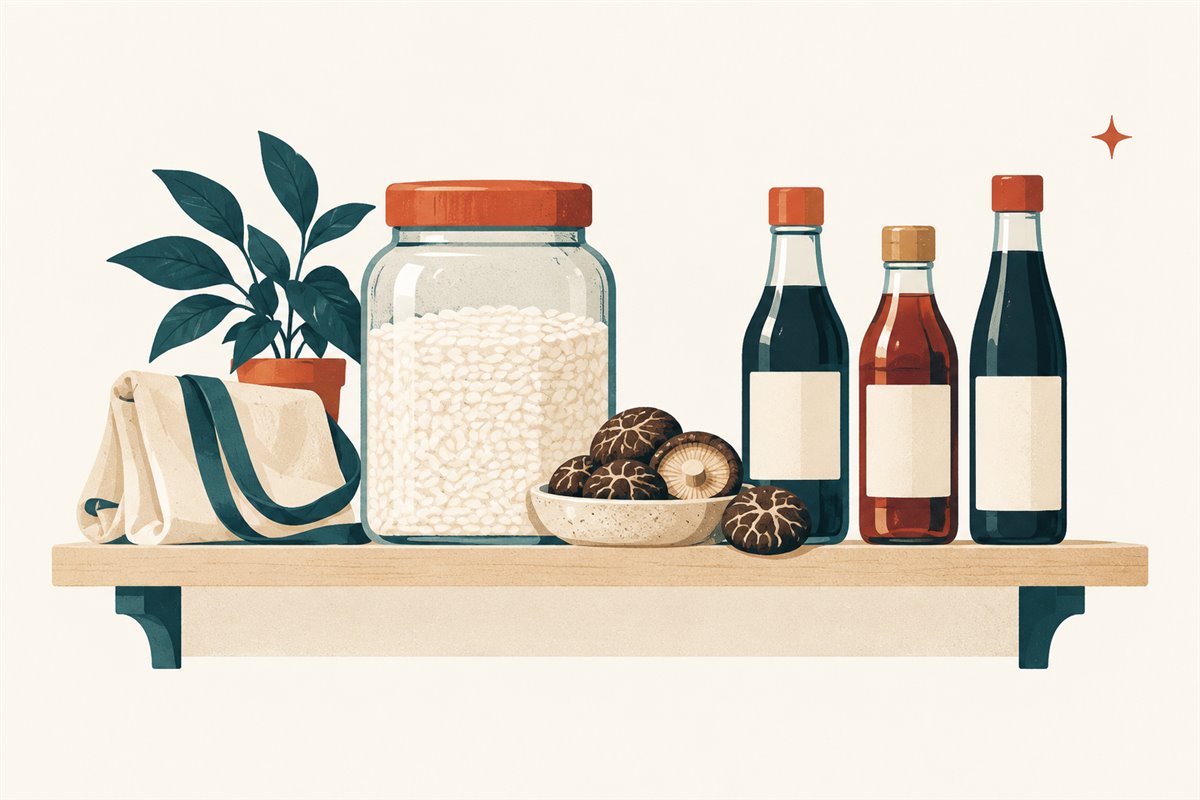
You do not need a separate shelf for every cuisine you want to cook. A useful pantry starts with a few ingredients that solve real meal problems, then grows around recipes you actually make. This guide shows how to stock a pantry for international cooking without turning the cupboard into a collection of half-used specialty products.
The goal is flexibility, not authenticity by shopping list. Soy sauce does not stand in for all East Asian cooking, cumin does not define a region, and coconut milk does not make a dish belong to a particular cuisine. Treat the combinations below as practical flavor modules, then use dish-specific recipes when regional identity matters.
Start with meals, not a master shopping list
Before buying anything, choose two dinners for the coming week. Write down the shelf-stable ingredients both meals use, then check what is already open. An ingredient earns a place in a small pantry when you can name at least two realistic uses before its quality declines.
Use this quick filter:
- Will it support two planned meals? A can of tomatoes might serve a bean stew and a pasta sauce. A specialty paste with one uncertain use can wait.
- Does it fit the available storage? A bulk sack is not a saving if heat, moisture, or pests will reach it before you do.
- Can everyone eating the meal use it safely? Check allergens, sodium, alcohol, and dietary needs on the actual package.
- What happens after opening? “Shelf-stable” can become “refrigerate after opening” as soon as a seal is broken.
- Will a smaller package reduce waste? Unit price matters less when the larger container goes stale.
USDA notes that shelf-stable products include many canned foods, rice, pasta, flour, sugar, spices, oils, and retort packages. It also warns that some canned products must stay refrigerated, so the label—not the shape of the package—controls the storage decision.
The compact core pantry
Start with functions rather than a universal brand list. Pick within each row according to the meals you already chose.
| Function | Compact starting point | Useful for | Check before buying |
|---|---|---|---|
| Starch | Two of rice, pasta, noodles, couscous, or another grain | Bowls, soups, one-pot meals, sides | Grain type, cooking ratio, wheat/egg allergens |
| Legume | One canned bean and one quick-cooking lentil | Stews, soups, salads, pasta | Sodium, can condition, dried-versus-cooked state |
| Vegetable base | Canned tomatoes plus one frozen vegetable | Sauces, stews, braises | Added salt, can condition, freezer space |
| Cooking fat | One neutral oil; one flavorful oil only if planned | Sautéing and finishing | Smoke point, sesame/nut allergens, storage after opening |
| Acidity | One vinegar used by the selected recipes | Balancing soups, sauces, dressings | Strength, sulfites or other label details |
| Seasoning | Salt, black pepper, and three frequently used spices | Baseline seasoning | Blend allergens, sodium, freshness |
Fresh onions and garlic are useful across many meals, but they are not permanent pantry fixtures. Buy amounts you can use while sound. Ginger freezes well in recipe-sized portions, but freezing changes its texture; it still works best where it will be grated or cooked.
Broth, bouillon, canned fish, nut butters, and shelf-stable milk can be useful additions, not automatic essentials. Add them only when planned recipes justify them and label checks fit the household.
Add one flavor module at a time
A module is a small group of ingredients that works together in more than one dish. It is not a passport to a cuisine. Use it to narrow shopping, then follow a recipe that names its actual regional context.
Soy, rice vinegar, and toasted sesame oil
This combination can support noodles, dipping sauces, vegetable dishes, and marinades across several East Asian-inspired weeknight meals. Start with a small bottle of soy sauce and rice vinegar. Add toasted sesame oil only when a recipe calls for its strong finishing aroma.
Check soy sauce for soy, wheat, sodium, and any dietary certification you need. Sesame is one of the nine major US allergens. Rice vinegar products can differ in seasoning and sugar, so plain and seasoned versions are not always interchangeable.
For a narrower Cantonese branch, use the small Cantonese pantry guide. That page can explain a dish-specific sauce function more precisely than a broad international list.
Tomato, olive oil, and dried herbs
Canned tomatoes, olive oil, oregano, and red pepper flakes can support tomato-bean stews, pasta sauces, baked vegetables, and several Mediterranean-inspired meals. They do not make every result Italian, Greek, Spanish, or North African; technique and supporting ingredients still matter.
Choose whole, crushed, diced, or puréed tomatoes based on the selected recipe. The cuts contain different amounts of liquid and do not always reduce at the same speed. Check cans for salt and damage before use.
Coconut milk, ginger, and a small spice set
Coconut milk with ginger and carefully chosen spices can support soups, lentil pots, and vegetable braises inspired by multiple South and Southeast Asian traditions. Do not call a generic coconut stew a curry from a specific place unless its recipe supports that identity.
Buy one can before committing to a case. Coconut milk and coconut beverage are different products. Check the label for additives, package allergens, and refrigeration instructions after opening.
Cumin, chile, and tomato
Cumin, a chile product, and tomatoes can support beans, soups, rice dishes, and braises across many cooking traditions. The combination is broad; it is not a substitute for a Mexican, Indian, Middle Eastern, North African, or other region-specific recipe.
Whole dried chiles, chile powder blends, flakes, and pastes have different heat and ingredients. A blend may contain salt, garlic, wheat, sesame, or anti-caking agents. Read the label and add heat gradually.
Read labels before buying
The US Food and Drug Administration identifies nine major food allergens: milk, egg, fish, Crustacean shellfish, tree nuts, peanuts, wheat, soybeans, and sesame. Applicable packaged foods may identify them in the ingredient list, in parentheses, or in a nearby “Contains” statement.
That statement is a starting point, not permission to stop reading. Ingredient formulas can change. “May contain” and facility statements describe different manufacturer practices, and not every concern is one of the nine regulated major allergens. If the label does not answer a relevant question, contact the manufacturer or choose another product.
Also check:
- Storage directions: “Keep refrigerated” and “refrigerate after opening” are different instructions.
- Preparation directions: dried beans, noodles, concentrates, and spice pastes may require cooking or dilution.
- Sodium: soy sauce, bouillon, canned beans, broth, and pastes can concentrate in the same pot.
- Alcohol: cooking wines and extracts vary; do not assume cooking removes all alcohol.
- Use-by guidance: follow the package for quality and any stated safety instruction.
Store the pantry safely
Keep food in a cool, dry place away from the stove, sink, direct sun, pipes, and household chemicals. USDA says temperatures below 85°F are best for canned goods and warns that heat increases spoilage risk.
Leave products in original packaging when the label carries useful cooking, allergen, lot, or storage information. If a bag needs protection from humidity or pests, move it into a clean food-safe container and keep the original label or write the product name, opening date, and instructions on the container.
Use first-in, first-out rotation: place new items behind older ones, and review the shelf before shopping. Date opened sauces, oils, spices, grains, and transferred dry goods. A date is an inventory aid; the product label and condition still control the decision.
Inspect cans before buying and again before opening. Do not use cans that are bulging, leaking, rusted, or deeply dented, especially at a seam. If contents spurt forcefully or look abnormal, do not taste them.
After opening canned food, refrigerate the unused portion promptly. USDA generally gives high-acid canned foods five to seven refrigerated days and low-acid foods three to four days. A clean glass or plastic container can preserve quality better than the open can.
Turn the pantry into weeknight meals
Build a meal by choosing one item from each functional group, then use a tested recipe to set quantities and timing:
| Start with | Add | Use a module | Meal direction |
|---|---|---|---|
| Rice or another grain | Cooked beans and frozen vegetables | Cumin-chile-tomato | Grain bowl or recipe-specific rice pot |
| Pasta | White beans and greens | Tomato-oil-herb | Bean pasta or soup |
| Noodles | Tofu, egg, seafood, or cooked meat | Soy-vinegar-sesame | Brothy noodles or stir-fry |
| Lentils | Tomatoes or coconut milk and vegetables | Coconut-ginger-spice | Soup or thick lentil pot |
The table is a planning tool, not four complete recipes. Grain ratios, dried-legume cooking, raw-protein safety, and noodle timing require a formula designed for the exact ingredients. The one-pot international meal guide explains where adaptation is flexible and where a new tested recipe is safer.
Frequently asked questions
How large should a beginner pantry be?
Large enough to support the next two or three meals without crowding the shelf. Begin with one package in each needed functional group. Add a second variety only after the first is in regular rotation.
Should I decant dry goods into jars?
Only when a food-safe container improves protection or access. Preserve the product name, allergen information, cooking directions, lot details, and opening date. Decorative uniformity is not worth losing instructions.
Can I heat-seal grains in jars in the oven?
No. Penn State Extension says oven “dry canning” is not research-tested and can create spoilage risks; heating can also speed rancidity in nuts and grains. Use appropriate food-safe storage and established preservation guidance instead.
When should I replace spices?
Replace a spice when aroma and flavor no longer support the recipe, or sooner if moisture, pests, mold, or another sign of damage appears. Buy small amounts, store them away from heat and steam, and date the package when opened.
What if an allergen label is unclear?
Do not guess. Contact the manufacturer or choose a clearly labeled alternative. Recheck every package, including products bought before without a problem.
When should I discard a can?
Discard a can that is bulging, leaking, heavily rusted, or deeply dented, particularly along a seam. Do not taste suspicious food to test whether it is safe.
Choose two meals, buy the shared core and one flavor module, then date and store each item according to its label. A useful pantry earns its space one repeated meal at a time.