One pot can reduce cleanup, but it does not make every dinner automatic. Rice needs the right liquid. Pasta releases starch as it cooks. Lentil varieties soften at different rates. Raw chicken still needs separation and a verified endpoint. The useful shortcut is choosing a format that fits your ingredients, then following a tested recipe for that exact starch and protein.
These one-pot international meals for busy weeknights are five planning formats, not five invented recipes. They draw on broad cooking patterns from more than one tradition without claiming that a generic shortcut is a traditional dish. No named-human Not Hard to Cook kitchen test is claimed.
Choose a format, then choose a tested recipe
| Format | Best pantry base | Vessel | Attention | Main adaptation risk |
|---|---|---|---|---|
| Tomato and white-bean stew | Canned beans and tomatoes | Heavy saucepan or Dutch oven | Low to moderate | Salt and final thickness |
| Red-lentil coconut pot | Split red lentils and coconut milk | Heavy saucepan | Moderate | Lentil type and liquid |
| Ginger-soy chicken and rice | Rice, broth, soy sauce | Wide lidded pot | Moderate | Raw poultry and rice ratio |
| Pasta with beans and greens | Dry pasta, beans, tomatoes | Wide deep skillet or pot | Moderate to high | Pasta shape and evaporation |
| Brothy noodles with tofu or seafood | Noodles and broth | Saucepan | High near the finish | Noodle timing and protein doneness |
Choose the bean stew for the widest substitution margin because the beans are already cooked. Choose lentils when you have a recipe written for the exact lentil type. Chicken and rice requires the least improvisation. One-pot pasta and brothy noodles need attention near the end because starch can move from firm to soft quickly.
The one-pot sequence that prevents common failures
A recipe may change the order, but this sequence helps you evaluate whether its instructions are complete.
- Prepare before heating. Cut ingredients, measure liquid, drain or rinse canned foods as directed, and keep raw protein separate.
- Brown only when the recipe makes room for it. Crowding cools the pan. Some one-pot dishes begin with browning; others use a gentler simmer from the start.
- Cook aromatics without burning them. Onion may need several minutes, while garlic and ground spices often need less.
- Add a measured liquid. “Cover with broth” is not precise enough for a rice or pasta formula.
- Add the starch at its designed time. Rice, pasta, noodles, and lentils do not absorb liquid interchangeably.
- Add delicate vegetables and quick proteins later. Leafy greens, seafood, tofu, and fresh herbs usually need less time than firm vegetables or raw poultry.
- Verify doneness. Use the recipe’s texture cues and official temperature endpoint where relevant.
- Finish after the main cook. Acids, herbs, toasted oils, yogurt, or coconut cream may taste brighter or stay smoother when added at the stated finish.
The compact international pantry guide can help you buy a small shared base for these formats. It does not replace the tested recipe that establishes quantities.
Five adaptable one-pot meal formats
1. Tomato and white-bean stew
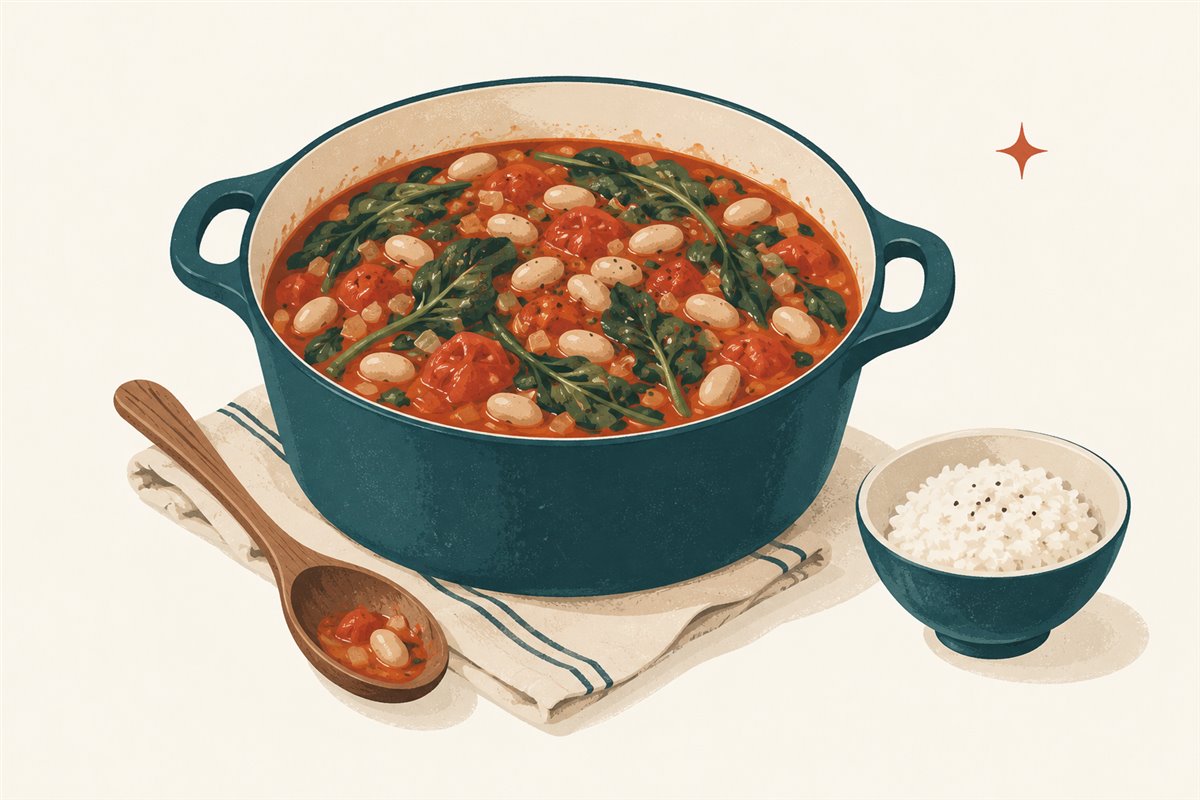
This is the most forgiving beginner format: aromatics, canned tomatoes, already-cooked white beans, vegetables, and enough broth or water to reach the intended consistency. The featured illustration for this guide shows that practical combination with leafy greens and rice.
Use an actual bean-stew recipe to determine the tomato-to-liquid balance and cooking time. Canned tomatoes vary by cut and purée content. Drained beans thicken a pot differently from beans added with their canning liquid.
Flexible changes include swapping one canned cooked bean for another of similar size, changing sturdy greens, or serving with a separately cooked grain. Less flexible changes include starting from dry beans, adding raw meat, or turning the stew into a rice pot. Those changes introduce new cooking and safety requirements.
This format can resemble meals found across Mediterranean, European, Middle Eastern, and American home cooking, but a generic tomato-bean pot should not borrow the name of a specific regional dish.
2. Spiced red-lentil and coconut pot
Split red lentils cook into a soft, thick base. Coconut milk adds richness, while ginger, onion, garlic, tomato, and selected spices can move the flavor in different directions. The result may be inspired by South Asian or Southeast Asian pantry patterns, but the format is not automatically dal, curry, or a dish from a particular place.
Follow a recipe written for split red lentils. Brown, green, black, whole red, and split lentils have different cooking times and textures. Coconut milk also differs from refrigerated coconut beverage, coconut cream, and sweetened cream of coconut.
The safe adaptations are mostly at the finish: change the leafy green, adjust chile within tolerance, or add acid gradually. Changing lentil type, replacing coconut milk with dairy, or adding raw meat requires a formula that accounts for liquid, curdling, timing, and allergens.
3. Ginger-soy chicken and rice
Chicken and rice offers a complete meal, but it is the format with the highest cost of improvisation. Rice variety, rinsing, pot width, lid fit, chicken cut, starting temperature, and broth quantity all affect whether the rice is tender when the chicken is safe.
Use a tested recipe written for the exact rice and chicken cut. Keep raw chicken and its juices away from vegetables or garnishes that will not receive a full cook. FoodSafety.gov lists 165°F/74°C for poultry; check the thickest pieces without touching bone or the pot.
Soy sauce, toasted sesame oil, broth, and bottled marinades may contain soy, wheat, sesame, or high sodium. Use the product labels. A vegetarian sauce substitution can change flavor and allergen exposure, while a different rice can change the entire liquid calculation.
This is an East Asian-inspired weeknight format, not a claim that one ginger-soy chicken pot represents Cantonese, Chinese, Japanese, Korean, or another cuisine.
4. One-pot pasta with vegetables and beans
In a one-pot pasta, the pasta cooks in measured broth, water, tomatoes, or a combination. Its starch thickens the remaining liquid into sauce. This works because the recipe controls pasta shape, vessel width, simmer strength, and evaporation.
Do not exchange a small pasta for spaghetti, whole wheat, gluten-free pasta, or fresh noodles without a formula that supports it. Each absorbs and releases liquid differently. Stirring too little can create clumps; stirring too often can break delicate shapes and slow the return to a simmer.
Canned beans and sturdy vegetables can make the meal more substantial. Add tender greens near the end. Dairy, cheese, or yogurt may split if boiled hard, while nut- or seed-based finishes add their own allergen concerns.
5. Brothy noodles with tofu or seafood
Brothy noodles can move toward many flavor traditions depending on the broth, noodles, aromatics, and finish. The shared weeknight advantage is late assembly: build the broth first, cook firm vegetables, then add noodles and delicate protein according to their short timing.
Noodles vary widely. Some cook in the broth, some need soaking, and others release enough starch to cloud or thicken the liquid. Follow package and recipe directions rather than using a universal “three minutes.”
Tofu is already cooked but still needs heating and careful handling. Fish should reach 145°F/63°C under FoodSafety.gov guidance; shrimp should become pearly or white and opaque. If you expect leftovers, consider storing noodles separately because they continue absorbing broth.
Substitutions that change the method
Some substitutions change flavor. Others change whether dinner cooks correctly.
- Rice: Long-grain white, jasmine, basmati, brown, parboiled, and converted rice require different liquid or time. Use the exact type the recipe supports.
- Pasta and noodles: Shape, thickness, flour, egg content, and pre-cooking change absorption and cook time.
- Legumes: Canned beans are already cooked. Dried beans are not a volume-for-volume replacement and may require soaking or a much longer cook.
- Protein: Raw meat or seafood cannot replace cooked beans or tofu without new timing and safety steps.
- Liquid: Broth, tomatoes, coconut milk, dairy, and water contain different salt, fat, acid, and solids.
- Vessel: A wide skillet evaporates faster than a narrow pot. A slow cooker or pressure cooker is not a direct substitute for a stovetop pot.
Allergen needs narrow the choice further. The FDA’s nine major allergens include milk, egg, fish, Crustacean shellfish, tree nuts, peanuts, wheat, soybeans, and sesame. Check broth, sauces, noodles, spice blends, coconut products, and garnishes every time.
Cook, cool, and reheat safely
One-pot cooking still follows Clean, Separate, Cook, and Chill. Wash hands and surfaces. Keep raw protein and its utensils away from food that will not receive the full cook. Do not reuse a raw-protein plate for cooked food.
FoodSafety.gov’s current consumer endpoints include:
- 165°F/74°C for poultry;
- 160°F/71°C for ground meats and egg dishes;
- 145°F/63°C for fish; and
- pearly or white, opaque flesh for shrimp and similar shellfish.
Move leftovers into small shallow containers and refrigerate within two hours. Use or freeze them within four days. Reheat leftovers to 165°F/74°C and stir dense soups or rice dishes so cold spots do not remain.
Frequently asked questions
Does “one pot” mean every ingredient goes in at once?
No. One vessel can still have several stages. Browning, simmering, adding starch, adding delicate vegetables, and finishing may happen at different times.
Can I double a one-pot recipe?
Only when the recipe or author gives a tested scaling method. A doubled batch changes depth, heating rate, evaporation, and safety-check locations. Two normal batches are often more predictable.
Can frozen meat go directly into the pot?
Do not assume so. Follow a tested appliance and recipe instruction, or thaw safely in the refrigerator, in cold water with frequent changes, or in the microwave followed by immediate cooking.
Can I add rice or pasta to any soup?
Not without changing the liquid and timing. Starch absorbs broth and may continue doing so during storage. Use a recipe designed for the addition or cook the starch separately.
Is a slow cooker or pressure cooker still one pot?
It is one vessel, but it is a different method. Stovetop instructions cannot be transferred directly because pressure, evaporation, and heating time change. Use a recipe written for the appliance.
Choose one format, find a tested recipe matching the exact starch and protein, read it through, and make only the substitutions it supports. Less cleanup is useful; clear limits are what make the shortcut repeatable.