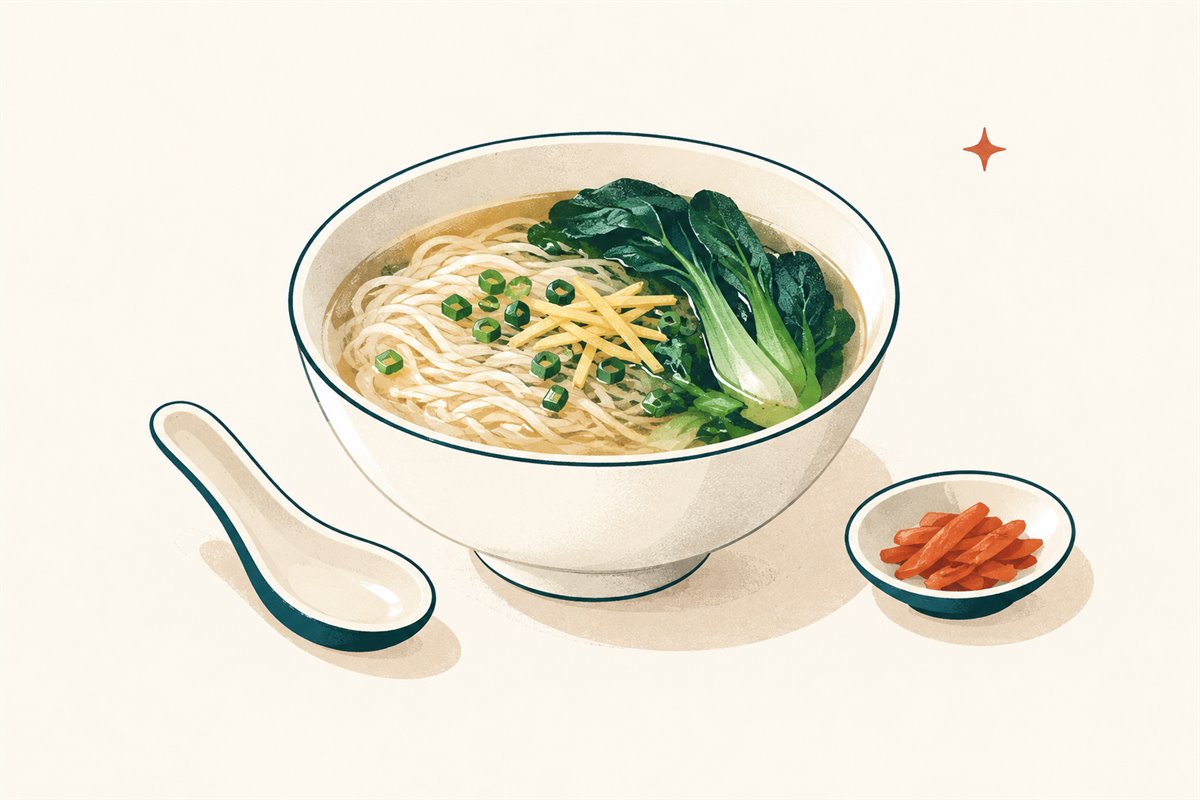
If you need a Cantonese weeknight recipe from Not Hard to Cook today, the verified choice in this collection is Cantonese soy sauce pan-fried noodles, with 15 minutes of preparation, 15 minutes of cooking, and 30 minutes total. The site does not yet have a verified public Cantonese soup recipe to list here.
That makes this a temporary bridge, not an inflated “best of” roundup. Noodles you can cook now appear first. Soups have a separate section explaining the collection gap and the difference between a genuine quick-boiled soup and a shortcut that changes the dish.
What is available now
| Section | Public recipe | Honest total time | Pan or pot | Best for |
|---|---|---|---|---|
| Noodles | Cantonese soy sauce pan-fried noodles | 30 minutes | Wok or wide skillet, plus saucepan | Two main-dish servings with dry, separate strands |
| Soups | No verified public recipe yet | — | — | Browse the collection status below rather than a placeholder recipe |
The 30-minute figure includes loosening and drying the noodles, mixing the sauce, cutting the vegetables, and cooking. It is not a cook-time-only headline.
Noodles you can cook now
Cantonese soy sauce pan-fried noodles — 30 minutes
Cantonese soy sauce pan-fried noodles are a two-serving home-stove adaptation of Hong Kong-style supreme soy sauce chow mein. Thin egg noodles are loosened, drained, and dried before they go into the pan. Onion, bean sprouts, and scallions add texture, while measured light soy, dark soy, sesame oil, sugar, and white pepper form a light coating rather than a pooled sauce.
Choose this recipe when you want:
- a noodle main that uses a wide skillet if you do not own a wok;
- clear timing for noodle preparation and pan work;
- a sauce mixed before the burner gets busy;
- guidance for fresh versus dried pan-fry noodles;
- explicit notes for wheat, egg, soy, sesame, and sprout handling.
This is a pan-fried noodle dish, not noodle soup. Do not add broth and expect the ingredient balance or noodle texture to carry over.
Browse the Cantonese Rice & Noodles archive for newly published dishes as the collection grows. The steamed rice guide is useful for rice technique, but it is not counted as a soup or noodle recipe here.
Cantonese soup collection: in progress
There is no verified public soup recipe in the current publication inventory. Rather than rename a planned recipe, borrow a competitor’s dish, or count this hub as its own soup entry, the list stays empty until a complete recipe is public.
The Soups & One-Pot Meals archive is the current collection route. A future soup belongs in the table only after it has:
- a public, working recipe URL;
- preparation, cooking, and total time that include the real work;
- measured ingredients and complete instructions;
- an evidence or testing status that does not imply a kitchen test that never happened;
- relevant allergen, doneness, cooling, and storage guidance;
- a clear category assignment and useful featured image.
This rule prevents an archive from looking fuller than it is.
“Quick soup” has a specific limit
Cantonese soup is not one method. In a 2023 interview with Hong Kong Cantonese chefs, the MICHELIN Guide distinguishes quick-boiled soup (gwan tong) from long-simmered soup (lou fo tong) and double-boiled soup (dan tong). The interviewed chefs described anything under three hours as quick-boiled in that framework, while the other styles take considerably longer.
That context matters for a weeknight guide. “Quick” can mean faster than a long Cantonese simmer, not necessarily a 15-minute dinner. A future listing should state its actual total time rather than promise speed from the category name alone.
When packaged stock is an adaptation
A recipe built around homemade stock cannot silently replace it with a carton and keep the same claim. Packaged broth or stock can be a practical weeknight adaptation, but its salt, aromatics, concentration, allergens, and flavor differ by product.
When a future recipe offers that path, it should:
- call the shortcut an adaptation;
- name the volume and product type;
- tell readers to check the ingredient and allergen label;
- account for the broth’s sodium before adding soy sauce, oyster sauce, or salt;
- explain the expected flavor change;
- include the shortcut in the displayed total time.
Bouillon, concentrate, canned broth, and boxed stock are not automatic one-for-one equivalents. Hot water plus sauces is also not a substitute for a developed stock unless a specific recipe is designed around it.
Choose by the time you actually have
You have about 30 minutes
Cook the soy sauce pan-fried noodles. Read the noodle package before starting, cut the vegetables, and mix the sauce before heating the pan.
You want soup but have no prepared stock
Do not treat the word “quick” as permission to hide stock-making time. Check the Soups & One-Pot Meals archive for a newly published recipe. If none is present, choose a different complete dinner rather than improvising from an incomplete list.
You have homemade stock or suitable packaged broth
Keep it for a recipe that specifies the stock type, amount, seasoning, and shortcut consequences. The ingredient alone is not a finished Cantonese soup formula.
Weeknight noodle workflow
The live noodle recipe becomes easier when the sequence is set before cooking:
- Check whether your noodles are fresh or dried and follow their package directions where the recipe tells you to.
- Wash, cut, and thoroughly drain the vegetables.
- Measure light soy, dark soy, water, sugar, sesame oil, and pepper into one small bowl.
- Loosen the noodles, drain them, and let surface moisture escape.
- Heat the pan only after every ingredient is ready.
- Cook in the recipe’s order and serve promptly.
This is mise en place with a practical purpose: the pan stage moves faster than the preparation stage.
Leftovers and soup safety
The USDA Food Safety and Inspection Service advises refrigerating perishable leftovers within two hours, or one hour when the temperature is above 90°F/32°C. Divide a large pot of soup into shallow containers so it cools more quickly. Refrigerated leftovers are generally used within three to four days.
When reheating, FSIS advises bringing sauces, soups, and gravies to a rolling boil and reheating leftovers to 165°F/74°C. These are baseline handling rules; a future recipe may need additional ingredient-specific safety instructions.
For noodles, expect texture to soften during storage. The live pan-fried-noodle recipe gives its own storage and reheating notes, which should take priority for that dish.
Frequently asked questions
Where are the quick Cantonese soup recipes?
None is verified public in the current Not Hard to Cook inventory. This page will not list a planned title as though it can already be cooked. Use the Soups & One-Pot Meals archive to check for later additions.
Are pan-fried noodles and noodle soup interchangeable?
No. The liquid level, seasoning, noodle handling, and intended texture differ. Use a recipe written for the dish you want.
Can I use spaghetti in the Cantonese pan-fried noodle recipe?
The live recipe specifies thin Hong Kong-style pan-fry egg noodles and warns against silent substitutions. A different noodle changes hydration, cooking time, allergens, and texture.
Does 30 minutes mean only cooking time?
No. The noodle recipe states 15 minutes of preparation plus 15 minutes of cooking, for 30 minutes total.
Is boxed broth traditional Cantonese stock?
Not automatically. It can be a useful adaptation when a recipe names it, accounts for salt and flavor differences, and labels the change honestly.
What happens when the collection grows
Once the site has several public noodle recipes and several public soup recipes, this combined page should be reassessed. The cleaner long-term structure may be separate, substantial Rice & Noodles and Soups & One-Pot Meals hubs, with this URL narrowed or consolidated to avoid duplicating both archives.
Until then, this page has one job: help you find what is genuinely cookable now without padding the list.