The best first stir-fry is not automatically the shortest one. It is the recipe that fits your pan, your available time, and the skill you want to practice. These easy Cantonese stir-fries for beginners give you four honest starting points: tender greens, softly folded eggs, browned noodles, or seared chicken.
Each recipe below is already public and gives exact pan sizes, measured ingredients, heat cues, and recovery steps. The recipes are source-verified editorial adaptations; Not Hard to Cook does not present them as named-human kitchen tests.
Choose your first Cantonese stir-fry
| Recipe | Total time | Pan or key equipment | Difficulty | Skill to practice |
|---|---|---|---|---|
| Garlic choy sum | 25 minutes | 12-inch lidded skillet | Easy | Cooking stems and leaves in stages |
| Shrimp and scrambled eggs | 30 minutes | 12-inch nonstick skillet | Intermediate | Managing residual heat for soft egg folds |
| Soy sauce pan-fried noodles | 30 minutes | 14-inch flat-bottomed wok and 4-quart saucepan | Easy | Browning noodles in controlled batches |
| Ginger scallion chicken | 55 minutes | 12-inch skillet and thin-probe thermometer | Intermediate | Searing protein without crowding the pan |
Start with the first row if you want the lightest equipment and the most forgiving ingredient. Choose the egg dish if you are comfortable moving quickly but want to learn when to take a pan off the heat. Pick the noodles when you can manage two vessels. Save the chicken for a night when you have time for its 15-minute marinade and temperature checks.
What to prepare before the pan gets hot
Stir-frying moves too quickly to pause for chopping or measuring. Before you turn on the burner, cut every ingredient, separate quick-cooking pieces from slower ones, mix the sauce, and place your tools within reach. Utah State University Extension makes the same practical point in its stir-fry guidance: prepare the ingredients before cooking begins.
Dry ingredients as directed. Surface water lowers the pan temperature and can turn a quick fry into an unintended braise. This is especially important for leafy greens and rinsed noodles.
For a recipe with raw chicken or shrimp, keep the raw-food bowl and utensils away from the clean plate that will receive cooked food. Wash hands, surfaces, and tools after raw-food contact. When a recipe calls for a thermometer, set it beside the stove before you start rather than searching for it while the pan is hot.
If soy sauce, oyster sauce, sesame oil, or Shaoxing wine is new to you, read the small Cantonese pantry guide first. Check every product label for soy, wheat, sesame, mollusc, alcohol, sodium, and cross-contact information that matters in your kitchen.
Four live recipes, organized by skill
1. Garlic choy sum for learning staged vegetables
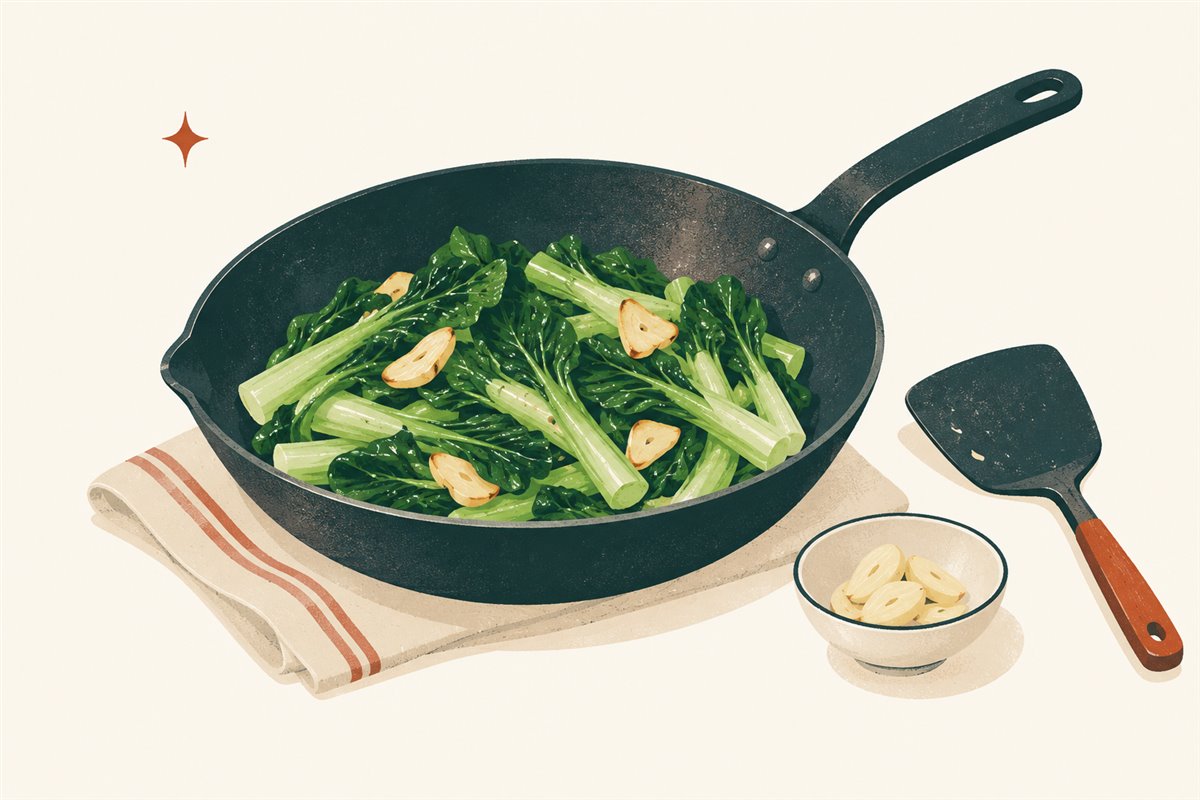
Garlic choy sum stir-fry is the clearest first step. The 25-minute recipe uses a 12-inch skillet with a lid and divides one pound of choy sum into two shallow batches.
The useful lesson is timing by plant part. Choy sum stems need a head start; the leaves go in later so they can wilt without becoming limp. A measured splash of water creates brief steam under the lid, while uncovering the pan lets excess moisture escape. If liquid begins pooling, the recipe gives a recovery path instead of asking you to hide the problem with more sauce.
Choose this dish when you want a vegetable side, have access to fresh choy sum, and prefer a short ingredient list. Do not substitute the site’s bok choy with oyster sauce recipe here: that version deliberately blanches the greens and is not a stir-fry.
2. Shrimp and scrambled eggs for heat control
Cantonese shrimp and scrambled eggs takes 30 minutes and uses a 12-inch nonstick skillet. It is intermediate rather than “effortless” because two delicate ingredients finish on different schedules.
The shrimp cooks first, then joins beaten egg. Broad folds build soft layers while switching the heat off at the right moment limits overcooking. The recipe explains when residual pan heat is useful and when the pan needs a short return to the burner.
Choose it when you want a protein-centered dish and can stay at the stove for the full active cook. Follow its seafood and egg doneness guidance rather than relying on a single timer; shrimp size, pan material, and burner output all affect the finish.
3. Soy sauce pan-fried noodles for working in batches
Cantonese soy sauce pan-fried noodles is a 30-minute route to dry soy sauce chow mein with toasted edges and crisp-tender sprouts. It uses a 14-inch flat-bottomed wok plus a saucepan, so it is simple in technique but not a one-pan meal.
The transferable skill is loading the pan lightly enough for noodles to contact the hot surface. Working in controlled portions helps the noodles brown instead of steaming in a dense mound. The sauce goes in as a measured finish, not as a pool intended to rescue pale noodles.
Choose this recipe when noodles are the meal’s center and you have space for two vessels. Read the package cues in the full recipe before shopping because fresh, refrigerated, and shelf-stable noodles do not behave identically.
4. Ginger scallion chicken for searing and safe doneness
Ginger scallion chicken stir-fry is the most involved option here. Its honest 55-minute total includes preparation, a 15-minute refrigerated marinade, two-batch cooking, and thermometer checks.
The chicken pieces are limited in thickness and seared in two shallow batches so a home burner can recover between additions. Ginger, garlic, and pale scallion sections build the aromatic base; the dark-green scallion parts finish the dish. A light oyster-sauce glaze should cling rather than gather as a soup at the bottom of the pan.
Choose this recipe when you want to practice protein browning and can verify the safety endpoint. FoodSafety.gov lists 165°F/74°C for poultry. Browning and clear juices can help you judge progress, but they do not replace the thermometer check specified in the recipe.
How to stir-fry on an ordinary home stove
You do not need a restaurant burner to use these recipes. You do need to follow the pan size and batch depth each one was designed around. A broad skillet can outperform an oversized round wok on a modest electric or induction element because more of its base contacts the heat source.
Preheat for the pan you own
Preheating is not a contest to make the pan smoke. Follow the individual recipe and the cookware maker’s limits. A drop of ingredient should sizzle when it reaches properly heated oil, but an empty nonstick skillet should never be left over high heat indefinitely.
Give the pan room to recover
Adding cold food pulls heat from the metal. A shallow batch gives moisture room to escape and lets the burner restore the pan’s temperature. Utah State University Extension specifically notes that cooking protein in batches helps keep the pan hot.
Treat pooled liquid as information
A watery pan often signals crowded food, wet ingredients, or a pan that had not recovered. Stop adding ingredients. Spread the current batch into a shallow layer and follow the recipe’s stated recovery step. Do not automatically add cornstarch or extra sauce; that changes the formula and can make a salty, heavy coating.
Use sensory cues and safety checks for different jobs
Sizzle, aroma, color, and texture tell you how the cooking is progressing. A thermometer answers a different question when a recipe specifies a safety endpoint. Keep both kinds of guidance: one protects the intended texture, and the other verifies doneness.
A simple first-meal route
For a first attempt, make garlic choy sum and serve it with rice. The greens teach staging and heat recovery without requiring raw-protein handling. If you need a repeatable base, use the site’s steamed-rice method and start the rice before heating the skillet.
On a later night, move to shrimp and eggs or noodles. Try the chicken when you can give the marinade, two batches, and temperature checks their full time. Progress here means controlling one more variable, not buying more equipment.
Frequently asked questions
Do I need a wok for Cantonese stir-fry?
No. Use the vessel specified by the recipe. Three dishes in this guide were developed editorially around a 12-inch skillet; the noodle recipe specifies a 14-inch flat-bottomed wok and a saucepan. A stable pan that matches the burner is more useful than a large wok the burner cannot heat evenly.
Why did my stir-fry turn watery?
The common causes are wet ingredients, too much food at once, or adding the next batch before the pan recovers. Prepare and dry the ingredients first, keep batches shallow, and follow the recipe’s liquid measurements. Salt timing also matters for some greens because salt draws out moisture.
What should I prepare first?
Read the complete recipe, then cut ingredients, mix sauces, and separate components by cooking order. Prepare raw protein last or on a separate board, wash hands and tools, and set out a clean plate for cooked food.
How should I store leftovers?
Move perishable leftovers into shallow containers and refrigerate them within two hours. FoodSafety.gov advises using refrigerated leftovers within three to four days and reheating leftovers to 165°F/74°C. For best texture, reheat only the portion you plan to eat; eggs and leafy greens soften with repeated heating.
Choose the row in the table that fits tonight, open that full recipe, and finish every prep step before the pan gets hot.