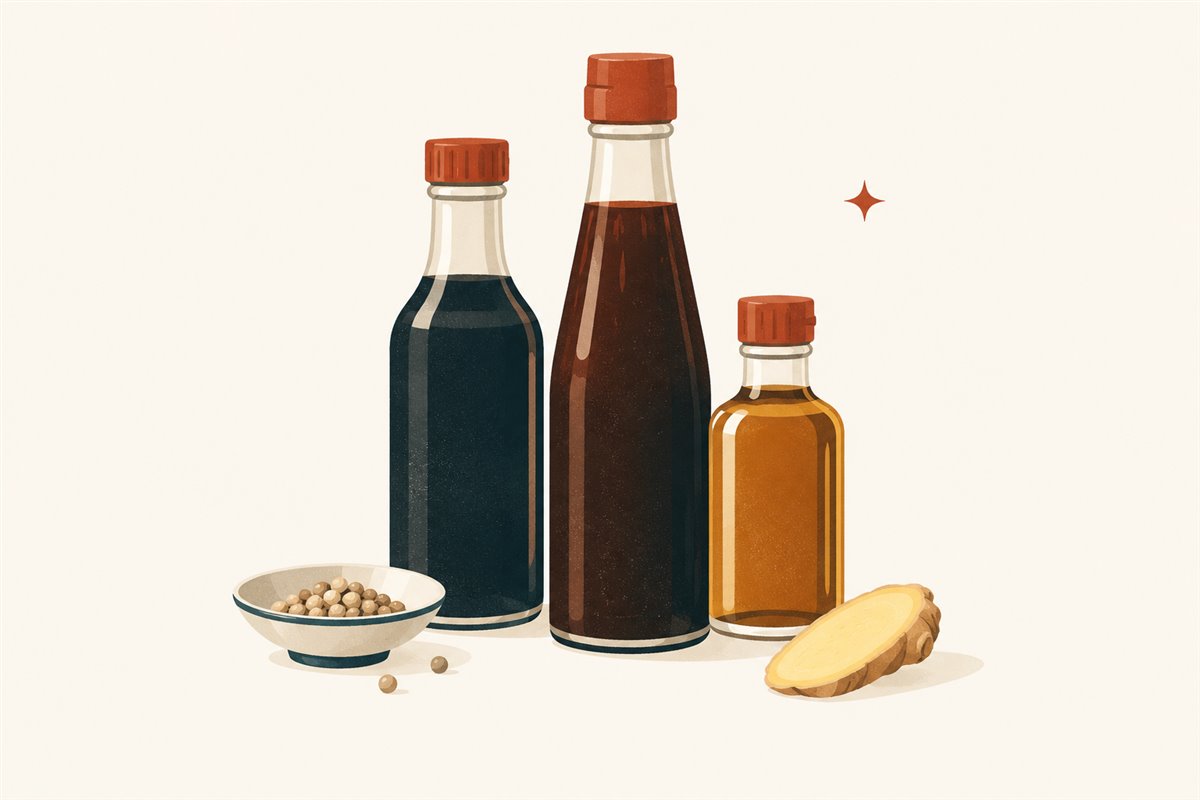
The essential ingredients for easy Cantonese home cooking do not fill an entire shelf. A useful first pantry is light soy sauce, oyster sauce or vegetarian mushroom stir-fry sauce, toasted sesame oil, cornstarch, neutral cooking oil, jasmine rice, garlic, ginger, and scallions. Add dark soy sauce and Shaoxing wine only when recipes you plan to cook call for them.
This smaller list is easier to learn and less likely to leave half-used products at the back of a cupboard. Each item below has a distinct job, a label cue, and at least one practical first use.
Label note: Formulas differ by brand and market. Soy, wheat, and sesame are major allergens under US labeling law. Oyster sauce contains oyster and may also contain wheat or soy. Read the complete ingredient and allergen statements every time you buy a product; this guide makes no allergen-free claim.
The short shopping list
| Buy first | What it does | What to look for | First use |
|---|---|---|---|
| Light soy sauce | Seasons marinades, sauces, noodles, and eggs | A Chinese-style soy sauce; check for soy and wheat | Soy sauce pan-fried noodles |
| Oyster sauce or vegetarian mushroom stir-fry sauce | Adds a savory-sweet base and body | Read the full ingredients; oyster and wheat are common in oyster sauce | Bok choy with oyster sauce |
| Toasted sesame oil | Adds aroma in small finishing amounts | Sesame oil as the ingredient; strong roasted aroma | Cantonese steamed egg |
| Cornstarch | Thickens sauces and helps marinades cling | Plain cornstarch without a seasoning blend | Ginger-scallion chicken stir-fry |
| Neutral cooking oil | Handles sautéing and stir-frying without adding a strong flavor | An oil suitable for the heat used in your recipe | Garlic choy sum stir-fry |
| Jasmine rice | Provides a fragrant, soft long-grain staple | Thai jasmine rice; follow the bag’s directions first | Steamed rice method |
| Garlic, ginger, and scallions | Build the fresh aromatic base | Firm garlic and ginger; crisp green scallions | Steamed fish with ginger and scallion |
If you can buy only four specialty items, start with light soy sauce, oyster or vegetarian mushroom sauce, toasted sesame oil, and cornstarch. Rice, neutral oil, garlic, ginger, and scallions are available in many general supermarkets.
1. Start with light soy sauce for seasoning
Chinese light soy sauce is the everyday seasoning bottle in this pantry. It brings salt and savory flavor to marinades, stir-fries, steamed dishes, and noodle sauces without the deeper color associated with dark soy sauce.
The word light describes the style, not a reduced-sodium product. A bottle labeled “less sodium” is a different formulation. Check the sodium panel and use the measured amount in the recipe before adding more.
On the label, look for soybeans and wheat among the ingredients or allergen statement. Lee Kum Kee’s current US premium soy sauce, for example, lists soybeans and wheat. That is one product example, not a guarantee about every brand.
If you substitute: Tamari or a wheat-free soy sauce can change salt level and flavor, and it is not automatically safe for every allergy or intolerance. Start with less, taste when safe to do so, and check the recipe’s texture before adding more. Do not replace light soy one-for-one with dark soy when appearance matters.
2. Choose oyster sauce or a vegetarian mushroom sauce
Oyster sauce gives vegetables, marinades, and stir-fries a savory-sweet base with enough body to cling. It is concentrated, so it should be measured before the pan gets hot.
Ingredient lists vary. A current Lee Kum Kee Panda Brand US formula lists oyster extractives and wheat flour. Because oyster is a mollusc, readers with shellfish allergies should review the complete label and medical guidance relevant to them rather than relying on a generic “shellfish” claim.
A vegetarian mushroom stir-fry sauce is a practical alternative when the recipe allows it. It changes the result: expect mushroom-forward flavor instead of oyster’s briny depth. The substitute may still contain soy or wheat, so “vegetarian” does not mean allergen-free.
Use the sauce in bok choy with oyster sauce before buying another all-purpose stir-fry sauce. That recipe also explains how to avoid making the finished sauce unnecessarily salty.
3. Use toasted sesame oil as an aromatic finish
Toasted sesame oil is not the default high-heat cooking oil in this starter pantry. Its strongest contribution is aroma, so many recipes use a small amount in a marinade, sauce, or at the end of cooking. Lee Kum Kee’s current product guidance likewise recommends adding a few drops before serving or in a marinade.
Look for a product whose label identifies sesame oil clearly. Sesame is one of the nine major food allergens in the United States. Keep the bottle away from heat and direct light, close it tightly, and follow the manufacturer’s storage direction after opening.
If you omit it: The dish loses roasted sesame aroma but can still work when sesame oil is not structurally important. Do not replace it with a large amount of sesame paste; that changes both texture and flavor.
4. Keep cornstarch for sauces and marinades
Cornstarch has two common jobs in this recipe cluster. Mixed with cool liquid, it thickens a sauce. Used in a measured marinade, it helps a thin coating cling to meat or seafood.
Always disperse cornstarch in cool or room-temperature liquid before it reaches a hot pan. Stir the mixture again immediately before pouring because the starch settles quickly. If a sauce becomes thicker than intended, take it off the heat and add water a teaspoon at a time.
Potato starch can thicken sauces, but it does not behave identically at every temperature. Use a tested recipe written for that starch instead of assuming a one-for-one swap.
5. Pick a neutral oil for actual cooking
Choose an oil with a mild flavor that suits the heat and method named in the recipe. Canola, grapeseed, and other refined neutral oils are common options, but smoke points and processing vary by product.
The useful distinction is simple: neutral oil carries the cooking heat; toasted sesame oil supplies aroma. Keeping those jobs separate prevents a strongly flavored finishing oil from becoming the default frying fat.
6. Buy jasmine rice, then follow one measuring system
Thai jasmine rice is a fragrant long-grain rice that cooks soft and slightly cohesive. It works with steamed dishes, stir-fries, and saucy mains. Water needs change with rice variety, brand, rinsing, vessel, batch size, and cooking method, so there is no honest universal ratio for every bag and cooker.
For a rice cooker, use the cup supplied with the appliance and the matching water line or follow that model’s manual. For the stovetop, begin with the directions on your rice package and record what you used. The site’s steamed rice guide explains how to adjust one variable at a time.
Store dry rice sealed in a cool, dry place and inspect it before use. Do not leave cooked rice at room temperature for extended periods; the rice guide includes current cooling, refrigeration, and reheating guidance.
7. Replenish garlic, ginger, and scallions
These fresh aromatics do not belong in a forever pantry. Buy quantities you can use while they remain sound.
- Garlic can begin a stir-fry or sauce, but it burns quickly once minced.
- Ginger is used in marinades, steamed dishes, and aromatic sauces. Slice, julienne, or mince it as the recipe directs because cut size changes how quickly it cooks.
- Scallions can cook with a dish or finish it. Keep white and green parts separate when a recipe gives them different jobs.
The steamed fish with ginger and scallion and ginger-scallion chicken stir-fry show how the same aromatics behave in two different methods.
What to add later
Buy the next tier only when your planned recipes justify it.
Dark soy sauce
Dark soy sauce adds deeper color and a fuller-bodied soy character. Lee Kum Kee’s current US dark soy sauce contains soybeans and wheat and specifically describes its color contribution. It is not simply a saltier version of light soy sauce, and using it as a direct replacement can darken a dish dramatically.
Add it when you plan to make dishes such as soy sauce pan-fried noodles that use color and seasoning deliberately.
Shaoxing wine
Shaoxing wine appears in many marinades and stir-fries, but it is not required for every beginner dish on this site. Buy a cooking product only after checking the label, alcohol content, salt, wheat or other allergen information, and the recipe’s substitution note.
If you avoid alcohol, use a recipe that supplies a tested alcohol-free path. Replacing wine with the same volume of vinegar produces a much sharper result and is not a neutral swap.
Dried shiitake mushrooms and fermented black beans
These are useful, recipe-specific additions rather than automatic first purchases. Dried shiitake mushrooms appear in steamed chicken with shiitake mushrooms. Fermented black beans deserve their own label and salt guidance before they enter a beginner recipe.
A minimal equipment list
You do not need a wok to use this pantry. Start with:
- a 10- to 12-inch skillet with a lid;
- a 2- to 3-quart saucepan with a tight-fitting lid;
- a heat-safe spatula or turner;
- a chef’s knife and stable cutting board;
- measuring spoons and a liquid measuring cup;
- one small bowl for mixing a sauce or slurry.
A steamer can be improvised safely with a lidded pot, a stable heat-safe rack, and a plate that leaves room for steam to circulate. Use a setup described by the recipe rather than balancing a plate on an unstable object.
Your first three dinners
- Make bok choy with oyster sauce to learn blanching, drainage, and a small cornstarch-thickened sauce.
- Cook Cantonese steamed egg to practice gentle steaming and restrained seasoning.
- Try soy sauce pan-fried noodles after adding dark soy sauce and learning to measure the two soy sauces separately.
These dishes reuse the same bottles without pretending every Cantonese recipe has the same flavor base.
Frequently asked questions
Are light and dark soy sauce interchangeable?
Not reliably. Light soy sauce is the primary seasoning bottle in this guide; dark soy sauce contributes substantially more color. Product salt levels also vary. Follow the recipe’s type and amount.
Do I need oyster sauce for Cantonese cooking?
No single bottled sauce is required for all Cantonese food. Oyster sauce is useful in this site’s current recipe cluster, especially vegetable and stir-fry dishes. Vegetarian mushroom stir-fry sauce can work in some recipes with a stated flavor change.
Is toasted sesame oil a cooking oil?
In this starter pantry, treat it as a measured aromatic ingredient rather than the default high-heat oil. Use a neutral cooking oil for the pan unless a recipe says otherwise.
Which brands should I buy?
This guide does not rank brands or use affiliate links. Compare product type, ingredient list, allergens, bottle size, storage directions, and availability. Buy the smallest practical size until you know how often you use it.
How should I store opened sauces?
Follow the label on the exact bottle. Close caps cleanly, write the opening date if that helps, and refrigerate when the manufacturer directs. Discard products with damaged packaging or signs of spoilage.
The practical rule
Build the pantry around recipes, not a shopping haul. Light soy sauce, oyster or mushroom sauce, toasted sesame oil, cornstarch, neutral oil, rice, garlic, ginger, and scallions will cover the site’s strongest beginner routes. Add dark soy, Shaoxing wine, dried mushrooms, and other specialties only when you can name the dish that will use them.
That approach keeps the shelf smaller and makes each ingredient easier to understand.